How to buy dried blue lotus flower wholesale
A practical guide for retailers, online sellers and brands: what good lots look like, what to ask a supplier and how to store what you buy.
Make sure it really is blue lotus
“Lotus” is used for several different plants. Blue lotus is Nymphaea caerulea, a water lily. Sacred lotus is Nelumbo nucifera, and the white Egyptian lotus is Nymphaea lotus. A trustworthy supplier lists the full botanical name on the product page, spec sheet and certificate of analysis.
Some listings sell dyed flowers or unrelated petals under the blue lotus name. Ask for lot photos and a certificate that covers identity, not just a product label.
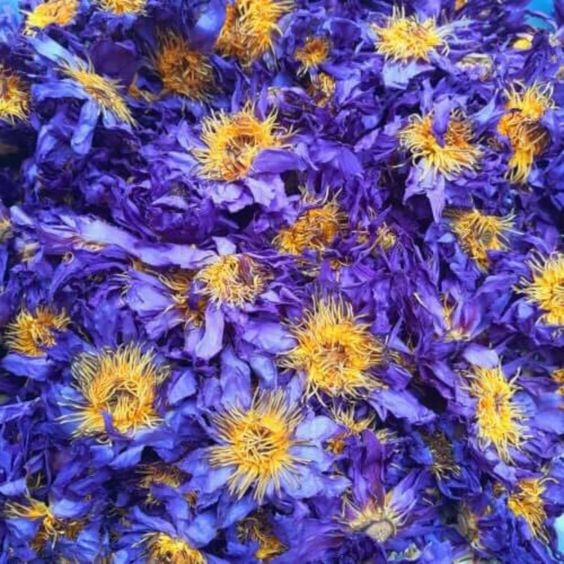
Signs of a good lot
Color
A deep blue-violet, not faded grey or brown, with golden-yellow stamens still attached.
Dryness
Dry and brittle to the touch, with no damp or musty smell. Ask for the moisture value; a target below about 12% is typical for dried botanicals.
Cleanliness
No mold, stems, stones, insects or other foreign matter.
Packing
Sealed food-grade bags that protect the flower from moisture, light and crushing.
Paperwork
Origin, a spec sheet and, on request, a certificate of analysis for the lot you receive.
Lot photos
Photos of the actual lot, not stock images, before you place a large order.
Questions to ask before you order
- What is the full botanical name, and where is it grown?
- Can I see photos of the exact lot and a certificate of analysis?
- What is the moisture level and how is it tested?
- What pack sizes and minimums do you offer?
- What is the lead time, and how is the order shipped?
- Can I get a sample first, and what does it cost?
- Do you offer private label and net terms?
We are happy to answer all of these. See the wholesale FAQ or ask us directly.
Red flags
- No botanical name, only “lotus”
- Prices far below other suppliers with no explanation
- No lot photos or documents on request
- Health or medical claims on the listing
- Unclear country of origin
Keep it in good condition
Sealed
Store in an airtight container or sealed bag so moisture cannot get in.
Cool and dry
Aim for 15-25 °C and under 50% humidity. Avoid basements and damp rooms.
Away from light
Keep it out of direct sunlight, which fades the color. Dried flower kept this way typically lasts a year or more.
Check the rules where you sell
Blue lotus is not a federally controlled substance in the US, but the FDA has not approved it as a food additive or dietary supplement ingredient, and some states restrict it. For example, Louisiana prohibits Nymphaea caerulea for human consumption. Laws change, so check your state and any marketplace policies before you list or label a product. Do not make health or medical claims about it.
This is general information, not legal advice. For label and claim wording, speak to a food and supplement attorney.
See it before you commit
Request a sample and the specification sheet. Approved samples can come with a certificate of analysis.